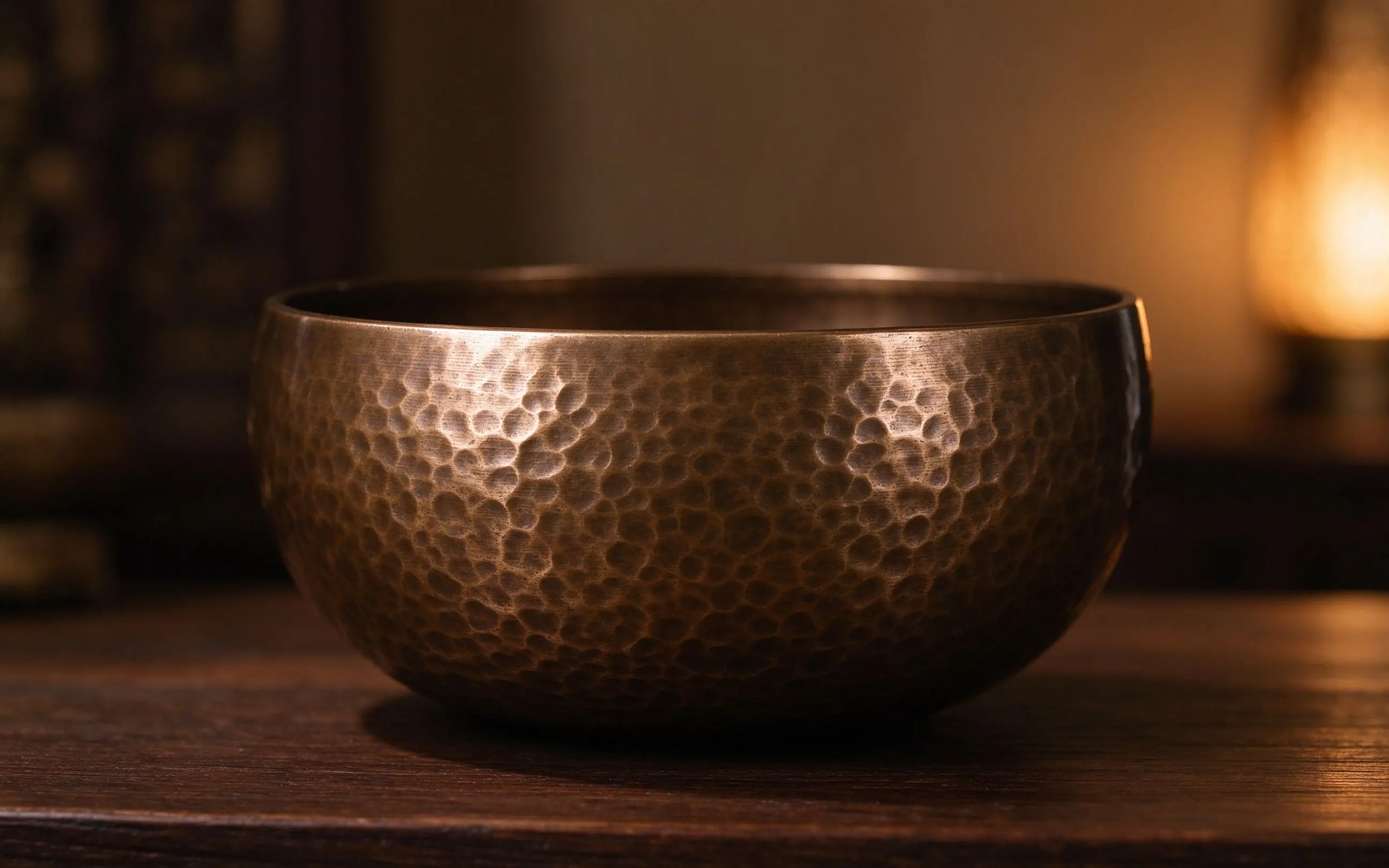
What Even Is a Full Moon Singing Bowl?
Full Moon bowls fall into the classic Jambati style of Nepali singing bowls. Traditionally, master artisans forged these bowls under the light of a full moon. Most are cast from a 7-metal alloy (copper, tin, iron, zinc, silver, gold, lead). Many modern authentic versions use a refined bronze copper-tin blend while keeping the old hand-hammered technique intact.
Here's the big thing most sellers skip:
- These are not pre-tuned instruments. The bowl is shaped and hammered first. The frequency is measured after it's finished.
- There is no factory setting that guarantees "18 cm = heart chakra". That's a loose trend, not a hard rule.
The signature of a quality Full Moon bowl isn't just its base tone. It's the rich stack of overtones. When you run your mallet around the rim, the sound unfolds in layers — warm, rolling, and immersive, not flat or one-note.
What Is Hz (Hertz), In Plain English?
Hertz = vibration cycles per second. Think of it like the pitch on a piano. Lower Hz = deeper, rumbling, slow vibration. Higher Hz = brighter, lighter, sharper tone.
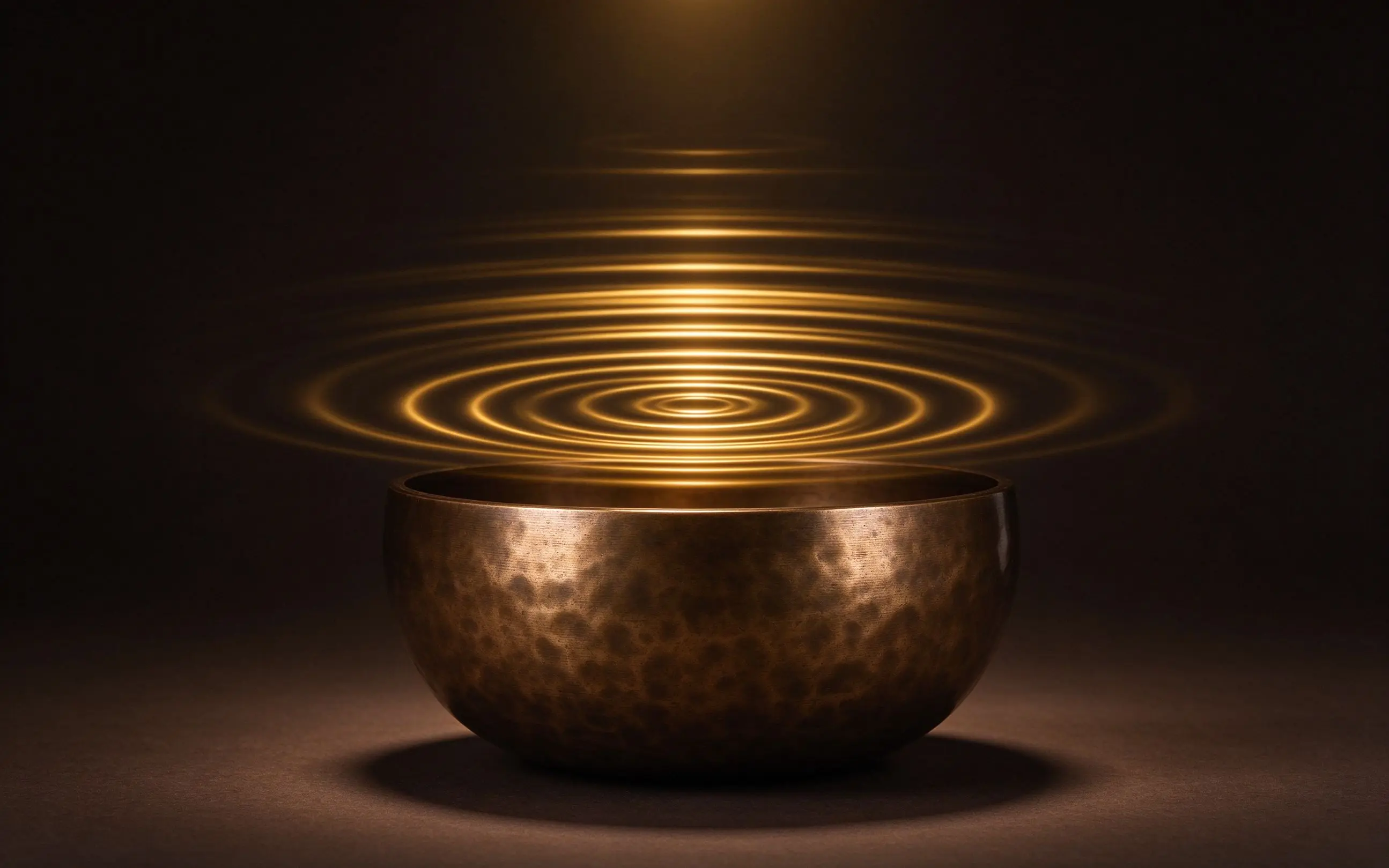
A critical detail: a singing bowl never produces just one pure tone. It has a fundamental frequency — the main note your ear picks up easily — plus a whole set of softer overtones layered on top. Those hidden overtones are what make a bowl feel lush and alive. Cheap mass-produced bowls usually have weak, thin overtones.
Size, Weight & Frequency Trend Chart
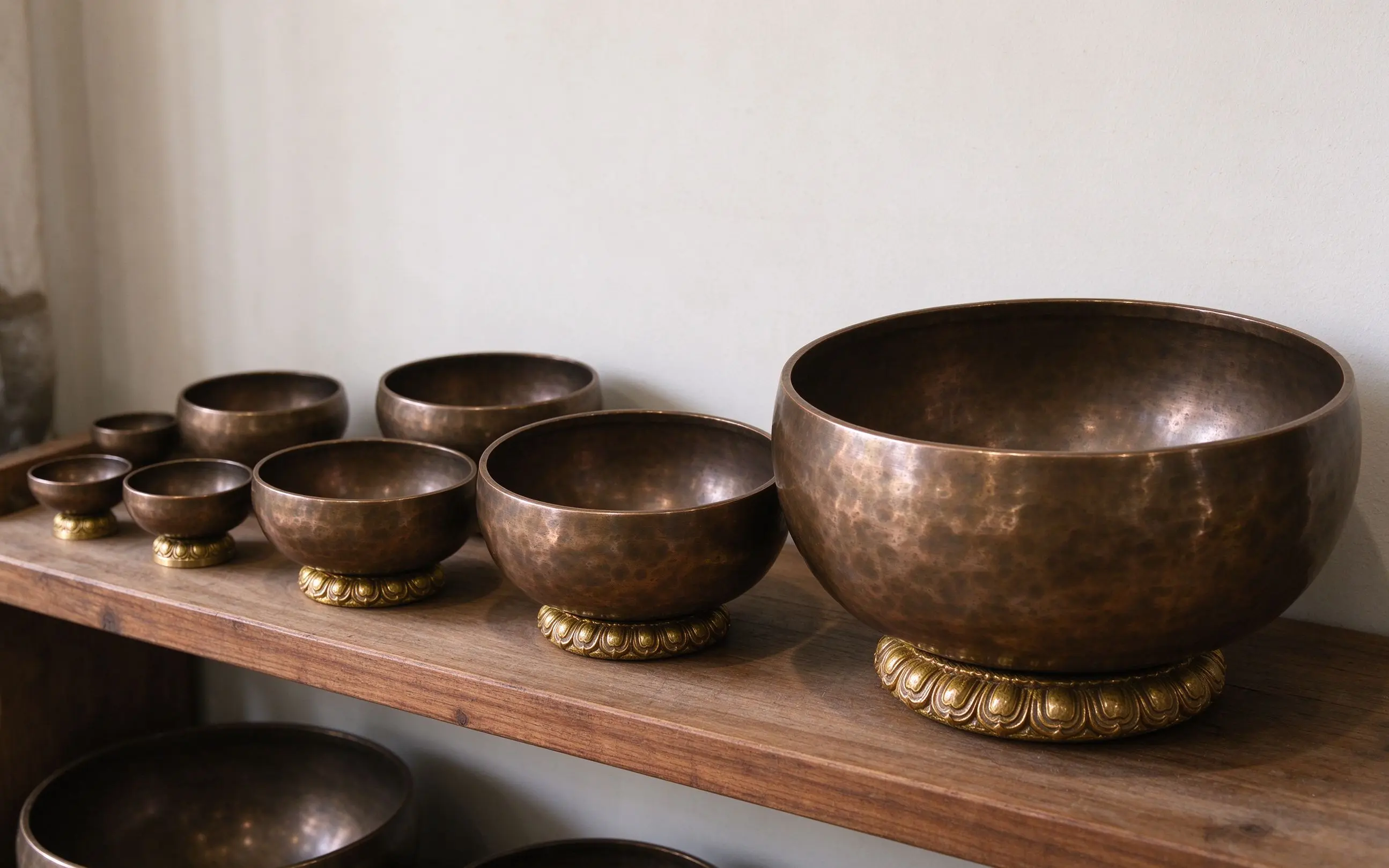
Important disclaimer upfront: Size is only a starting point. Two bowls with the exact same diameter can land on totally different notes. Wall thickness, curve shape, and hammering all shift the pitch.
General rule of thumb: bigger bowls tend to hit lower frequencies. Thicker walls = deeper tone and longer sustain. Thinner walls = brighter sound with shorter decay.
Standard tuning reference for this chart: A4 = 440 Hz
| Diameter | Typical Weight | Common Pitch | Typical Hz Range | Best For |
|---|---|---|---|---|
| 14–15 cm | 500–700 g | A3 / B3 | 220–250 Hz | Third Eye / Crown. Pocket-friendly, solo meditation on the go |
| 16–18 cm | 700–1000 g | G3 / A3 | 196–220 Hz | Throat / Third Eye. Daily quiet practice, desk reset |
| 19–21 cm | 1000–1400 g | F3 / G3 | 175–196 Hz | Heart chakra. The fan favorite for solo sound sessions |
| 22–24 cm | 1400–1700 g | D3 / E3 / F3 | 147–175 Hz | Sacral / Solar Plexus / Heart. Small group sound baths |
| 25–27 cm | 1700–2100 g | C3 / C#3 / D3 | 131–147 Hz | Root / Sacral. Grounding, heavy vibration for space setting |
| Over 27 cm | 2.2 kg + | C2 / B2 | 75–130 Hz | Ultra-low frequency. Full group sound baths, deep body resonance |
Pitch & Chakra Reference Chart
We're presenting this as a wellness framework, not rigid gospel. Different lineages map chakras slightly differently, so take this as a handy guide, not non-negotiable law.
| Note | Base Frequency | Chakra | Vibe & Use Case |
|---|---|---|---|
| C3 | 131 Hz | Root | Grounding, anchoring. Perfect if your mind's all over the place |
| D3 | 147 Hz | Sacral | Flow, creativity, releasing stuck emotion |
| E3 | 165 Hz | Solar Plexus | Confidence, setting healthy boundaries |
| F3 | 175 Hz | Heart | Openness, compassion. The crowd pleaser |
| G3 | 196 Hz | Throat | Clear communication, clearing mental clutter |
| A3 | 220 Hz | Third Eye | Focus, sharpen intuition |
| B3 | 247 Hz | Crown | Soft, elevated meditation, quiet mental chatter |
Overtones: This Is Where Full Moon Bowls Shine
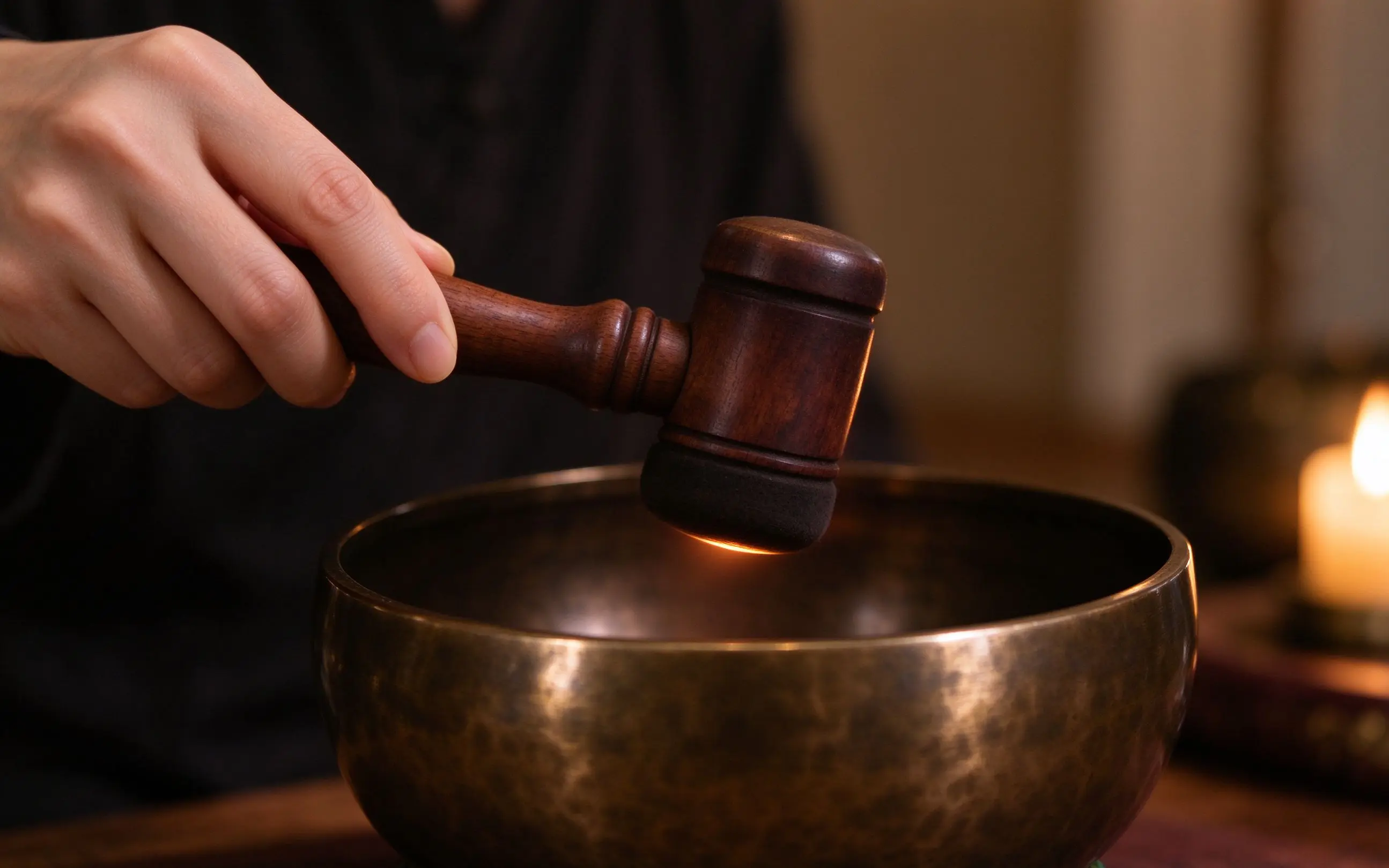
Anyone can grab a bowl that hits the right fundamental Hz. What separates a great Full Moon bowl from the rest is its overtone stack.
Basic Mass Bowl
One dominant note. Sounds clean, but flat. Fades fast.
Premium Full Moon Bowl
The fundamental rings out, then layers of softer harmonics bloom one after another. That signature rolling, wrapping sound people fall in love with.
Common Marketing Red Flags
A lot of listings out there stretch the truth to make a sale. Watch for these:
Keep It Simple (No Degree Required)
Alright, let's boil all this fancy info down so it sticks, no jargon attached.
Grab your mallet, slow down, and listen.